- >
- Blog >
- Do male hair loss treatments work?

Male pattern hair loss, or androgenetic alopecia, affects up to 80% of men at some point in their lives, with the condition becoming more likely as you age. It's also one of the most heavily marketed conditions online, where claims about ‘miracle’ treatments often outpace the evidence behind them.
What you should know is that some treatments for male hair loss are backed by multiple randomised, placebo-controlled trials, while others rely on small studies, anecdotes or no evidence at all.
This article looks at what the clinical evidence shows for each treatment type, so you can weigh up the options with clear expectations.
What is the best male hair loss treatment?
There's no single treatment that works best for every man, because the effects depend on several factors, including:
- How advanced the hair loss is
- How long it’s been progressing
- Individual biology
- How closely you follow the usage instructions.
With that said, the largest and most consistent evidence base supports the use of medical treatments for hair loss, which contain active ingredients to slow thinning and encourage regrowth. Even so, alternative treatments also have their place in a well-rounded approach.
Medical treatments for male hair loss
When it comes to medicated hair loss treatments, two options consistently take the prize for the highest proven efficacies - oral finasteride and topical minoxidil. There’s also significant evidence to suggest that a combined approach can be beneficial.
Oral finasteride
Finasteride works by blocking the enzyme that converts testosterone into DHT, a hormone known to lead to male hair loss. It’s available as tablets, either as generic finasteride or the branded alternative, Propecia.
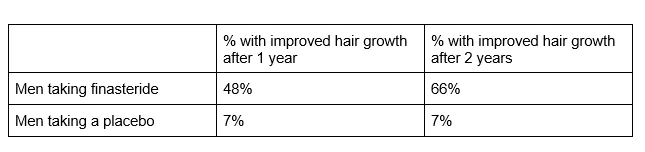
Several clinical trials have been conducted to evaluate finasteride’s efficacy, including two trials that involved a total of 1,553 men. In these trials, an expert panel consistently found improved hair growth in those taking finasteride compared with those taking a placebo.
Longer-term data tells a similar story: across five years, around 90% of men taking finasteride either maintained or improved hair growth, compared to only 25% of those taking a placebo.
Topical minoxidil
Minoxidil, usually a foam applied directly to the scalp, widens blood vessels and appears to extend the growth phase of hair follicles. It’s often sold under a brand name, such as Regaine.
Although it’s not believed to be as effective as oral finasteride, topical minoxidil has been shown to be more effective than a placebo or no treatment, accounting for a 30% increase in hair weight after 96 weeks in one study.
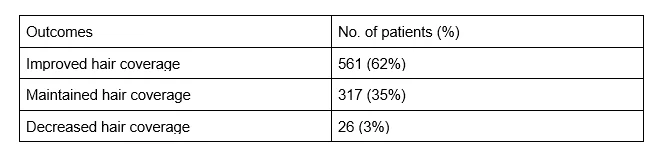
In a year-long observational study, topical minoxidil was found to improve or maintain hair coverage in 97% of patients, with tolerability being rated as ‘good’ or ‘very good’ by 89% of users.
Combination therapy
According to current research, a combination of treatments may be the most effective choice. A 2025 meta-analysis found that combining minoxidil with finasteride produced greater effects than minoxidil alone in hair density, hair diameter and expert-rated photographic assessment.
Meanwhile, a separate network meta-analysis of treatment combinations concluded that finasteride combined with minoxidil was the most effective option among the combination therapies studied in men.
For men who tolerate both treatments, this pairing seems to represent the most effective route available - however more, larger-scale research is needed in order to confidently establish this as fact.
What is the best shampoo for male hair loss?
No shampoo currently matches the weight of trial evidence behind finasteride or minoxidil, which may be partly due to the way they’re used. Shampoo that’s rinsed off the hair within minutes naturally has less time to provide benefits than a leave-on topical treatment or a daily tablet.
So does this mean hair loss shampoos are useless? Not at all - but it’s important to have realistic expectations about what they can and can’t achieve.
As you might expect, the efficacy of hair loss shampoos depends partly on the active ingredients used in them.
Ketoconazole shampoo
Though not studied to the same extent as medicated treatments, the anti-fungal agent ketoconazole has been evidenced to support hair growth in some animal and human studies. It’s thought that it may work by calming scalp inflammation linked to hair follicle damage.
Caffeine-based formulations
Another popular remedy, caffeine shampoos, also shows some promise. One study found a caffeine-based solution significantly stimulated hair follicle growth, suggesting it may be useful as a treatment for male hair loss.
However, as with ketoconazole, more research is needed to pin down the mechanism and efficacy of this treatment.
Other hair loss shampoos
There are a wealth of different compounds said to help with hair loss, such as biotin, saw palmetto or zinc pyrithione - and there is some evidence to support a beneficial effect. Mostly, though, the evidence is mixed and some studies seem to contradict each other.
Unfortunately, there isn’t enough research on each of these compounds to support a general effect on hair loss, as opposed to being effective in specific circumstances such as deficiencies or certain scalp conditions.
That doesn’t mean these products won’t work for you - it just means scientists don’t have the evidence to back up hair loss reduction claims, so they’re not usually recommended ahead of more robustly evidenced medicated options.
As a result, these types of hair loss shampoos are best thought of as a supporting part of a routine rather than a substitute for finasteride or minoxidil, particularly for men with more established hair loss.
At the end of the day, there are plenty of options for treating male hair loss - but not all are equal. While medicated treatments lead in the way of evidence, it may be worth combining medicated options with shampoos that help to support a healthy scalp environment.
Start your hair loss consultation with Pharmulous today to find the best hair loss treatment for your circumstances.
Check out similar articles

Dr Mohamed Obiedalla - 10th August 2026
The Weight-Loss Pill Everyone Has Been Waiting For? MHRA Approves...

Dr Amel Imam - 15th July 2026
What happens when you stop weight loss injections?

Dr Mohamed Obiedalla - 15th July 2026
What are the side effects of weight loss injections?

Dr Amel Imam - 11th July 2026
Where to get the emergency contraceptive pill

Dr Amel Imam - 8th July 2026
Does emergency contraception affect your period?

Dr Mohamed Obiedalla - 6th July 2026