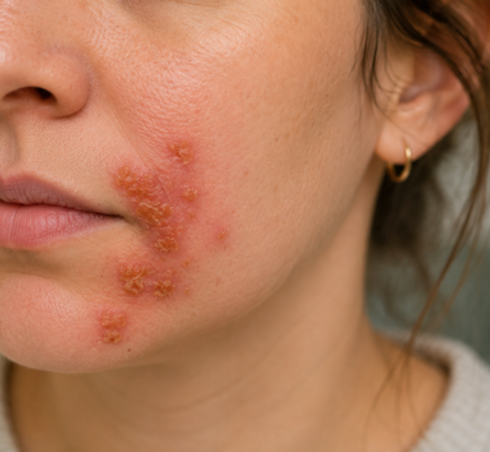
Impetigo

Impetigo is a common and highly contagious bacterial skin infection that affects the outer layer of the skin. It is usually caused by Staphylococcus aureus or Streptococcus pyogenes bacteria and is characterised by red sores or blisters that burst and form distinctive honey-coloured crusts.

General Information

Impetigo most commonly affects the face (around the nose and mouth), hands, arms and legs, although it can occur anywhere on the body. The infection spreads easily through close skin contact or by sharing towels, bedding and clothing.

For patients with localised non-bullous impetigo, topical treatment may be an effective option following assessment by a qualified prescriber.

Common symptoms of impetigo include:

  • Honey-coloured crusts on the skin
  • Small red sores or blisters
  • Oozing or weeping lesions
  • Mild itching
  • Mild soreness or discomfort
  • Crusted patches that gradually heal

If your infection is widespread, rapidly worsening, very painful, or you have a fever or infection around the eye, you should seek urgent medical attention rather than using this online service.

This service is not suitable if you have:

  • Infection around the eyes
  • Large blisters (bullous impetigo)
  • Widespread skin infection
  • Rapidly spreading redness
  • Severe pain or swelling
  • Fever or feeling generally unwell
  • Symptoms that have not improved with previous treatment

If you experience any of these symptoms, you should seek advice from your GP, NHS 111 or an Urgent Treatment Centre. If your symptoms are severe or rapidly worsening, attend your nearest Emergency Department.

Impetigo Treatment Options

Following your online assessment, our independent prescriber will determine the most appropriate treatment based on your symptoms, medical history, current medications, allergies and current UK clinical guidance.

Hydrogen Peroxide 1% Cream (Crystacide)

Hydrogen peroxide 1% cream is commonly recommended as a first-line treatment for localised non-bullous impetigo where appropriate. It helps reduce bacteria on the skin and may avoid the need for topical antibiotics in suitable cases.

Fusidic Acid 2% Cream

Fusidic acid is a topical antibiotic that may be prescribed for localised impetigo when clinically appropriate. Its use is carefully considered in line with current antimicrobial stewardship guidance to help reduce antibiotic resistance.

Fusidic Acid 2% Ointment

Fusidic acid ointment contains the same active ingredient as the cream but has a greasier formulation, making it suitable for drier, crusted or cracked lesions where an ointment base may be preferred.

Mupirocin 2% Ointment

Mupirocin is a topical antibiotic used to treat certain bacterial skin infections, including localised impetigo. It may be prescribed where clinically appropriate, particularly if it is considered a more suitable option based on the appearance of the infection, previous treatment history or local prescribing guidance.

How to Prevent the Spread of Impetigo

Impetigo is highly contagious. To help prevent spreading the infection:

  • Wash your hands regularly with soap and water.
  • Avoid touching or scratching affected areas.
  • Keep the affected skin clean and covered where possible.
  • Do not share towels, bedding, clothing or personal items.
  • Wash clothing and bedding regularly.
  • Keep fingernails short and clean.

People with impetigo should generally avoid close contact with others until 48 hours after starting appropriate treatment or until the lesions have crusted over and healed, in line with current public health guidance.


Frequently asked questions
  • Is impetigo contagious?

    Yes. Impetigo spreads easily through direct skin contact and by sharing personal items such as towels, bedding and clothing.

  • Can impetigo clear up without treatment?

    Some mild cases may resolve on their own, but treatment can help reduce symptoms, shorten recovery time and lower the risk of spreading the infection to others.

  • How long does impetigo take to heal?

    With appropriate treatment, most cases begin to improve within a few days and usually heal within 7 to 10 days.

  • Can adults get impetigo?

    Yes. Although more common in children, impetigo can affect adults, particularly if the skin is damaged or there is close contact with someone who has the infection.

  • Do I need antibiotics for impetigo?

    Not always. Mild, localised impetigo may be treated with non-antibiotic topical treatments such as hydrogen peroxide cream where appropriate. If antibiotics are needed, your prescriber will determine the most suitable option based on your assessment and current prescribing guidance.

  • Do I need to provide images as part of my online assessment?

    Yes, your images allow our qualified prescribers to:

    • Confirm your symptoms are consistent with impetigo
    • Assess the severity of the infection
    • Exclude conditions that require different treatment

    Many skin conditions can look similar to impetigo. To ensure treatment is safe and appropriate, we ask you to upload clear photographs of the affected area.

How It Works

Online Consultation

Online Consultation

We ask you to complete a quick and easy consultation and get you started.

Treatment Selection

Treatment Selection

We have a selection of treatments available for various conditions.

Order Processing

Order Processing

Our clinician team reviews your order to ensure it is safe and appropriate.

Express Delivery

Express Delivery

You will have complete visibility and control of your delivery.

Sign up to our newsletter

Sign up to be the first to know about promotions and news.