- >
- Blog >
- Excessive Sweating (Hyperhidrosis): Causes,...
9th June 2026
Excessive Sweating (Hyperhidrosis): Causes, Treatment Options and When to Get Help
Blog
Excessive sweating, medically known as hyperhidrosis, affects millions of people and can significantly impact confidence, clothing choices, work, social interactions and overall quality of life.
Many people experience excessive sweating from the underarms, hands, feet, face or scalp, even when they are not exercising, stressed or exposed to hot temperatures.
At Pharmulous, we provide discreet clinical assessments and treatment options for suitable patients experiencing excessive sweating.
What Is Hyperhidrosis?
Hyperhidrosis is a condition that causes sweating beyond what the body needs for temperature regulation. While sweating is a normal bodily function, excessive sweating can occur without obvious triggers and may interfere with daily activities.
The condition may affect a specific area of the body or occur more generally across multiple regions.
What Causes Excessive Sweating?
There are several potential causes of hyperhidrosis and excessive sweating.
Common Causes Include:
• Primary hyperhidrosis – often begins in childhood or early adulthood and commonly affects the underarms, hands and feet
• Stress, anxiety or emotional triggers
• Menopause and hormonal changes
• Overactive thyroid (hyperthyroidism)
• Diabetes or episodes of low blood sugar
• Infections and fever
• Certain medications
• Alcohol consumption
• Recreational drug use
• Weight changes
• Neurological conditions
• Less commonly, underlying medical conditions requiring further investigation
When Excessive Sweating May Indicate an Underlying Condition
You should seek medical advice before starting treatment if your sweating:
• Has started suddenly
• Is severe or worsening
• Mainly occurs at night
• Affects the whole body rather than specific areas
• Is accompanied by weight loss
• Occurs alongside fever
• Causes chest pain
• Is associated with palpitations
• Makes you feel generally unwell
Treatment options available from Pharmulous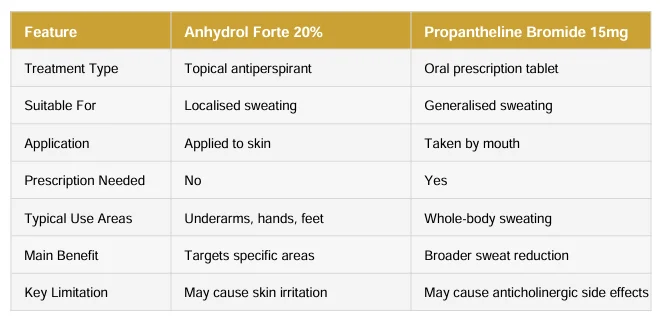
Anhydrol Forte 20%
Anhydrol Forte contains aluminium chloride hexahydrate 20%. It works by reducing sweat from the treated area and is often used for underarm sweating, sweaty hands or sweaty feet.
How it is usually used:
• Apply at night to completely dry skin
• Wash off in the morning
• Avoid applying to broken, irritated or recently shaved skin
• Use regularly at first, then reduce once sweating is controlled
Possible side effects include stinging, itching, redness or irritation. If irritation is severe, stop using it and seek advice.
Propantheline Bromide 15mg tablets
Propantheline is a prescription medicine that can reduce sweating across the body. It may be considered when sweating is more widespread, difficult to manage, or when topical treatment is not enough.
It is not suitable for everyone. It can cause side effects such as:
• Dry mouth
• Constipation
• Blurred vision
• Difficulty passing urine
• Fast heartbeat
• Drowsiness or dizziness
• Increased risk of overheating in hot weather
You should not use propantheline without clinical review if you have glaucoma, urinary retention, prostate problems, bowel obstruction, severe ulcerative colitis, myasthenia gravis, significant heart rhythm problems, or if you are pregnant or breastfeeding unless a clinician confirms it is suitable.
When should you seek urgent advice?
Seek medical advice urgently if sweating is associated with:
• Chest pain
• Shortness of breath
• Fainting
• Fever or feeling very unwell
• Unexplained weight loss
• Persistent night sweats
• New palpitations or tremor
• Confusion
• Severe dehydration
• Difficulty passing urine after treatment
The Pharmulous approach
Our clinicians review your symptoms, medical history and medicines before treatment is approved. The aim is to make sure treatment is safe, appropriate and likely to help.
Start a Pharmulous excessive sweating consultation to find out which option may be right for you.
Resources
• NHS guidance on excessive sweating and hyperhidrosis
• NHS advice on when to see a GP for excessive sweating
• Patient information for aluminium chloride antiperspirants such as Anhydrol Forte 20%
• Product information for propantheline bromide tablets
• MHRA Yellow Card medicine safety reporting information
• Clinical prescribing guidance on anticholinergic medicines and hyperhidrosis treatment
Check out similar articles

Dr Mohamed Obiedalla - 10th August 2026
The Weight-Loss Pill Everyone Has Been Waiting For? MHRA Approves...

Dr Amel Imam - 15th July 2026
What happens when you stop weight loss injections?

Dr Mohamed Obiedalla - 15th July 2026
What are the side effects of weight loss injections?

Dr Amel Imam - 11th July 2026
Where to get the emergency contraceptive pill

Dr Mohamed Obiedalla - 10th July 2026
Do male hair loss treatments work?

Dr Amel Imam - 8th July 2026